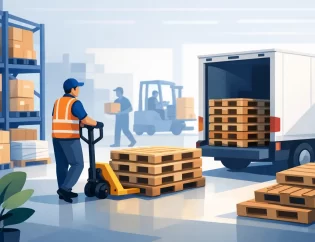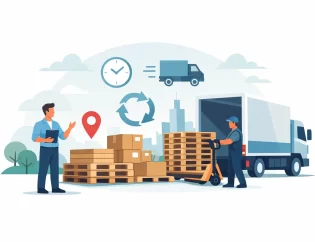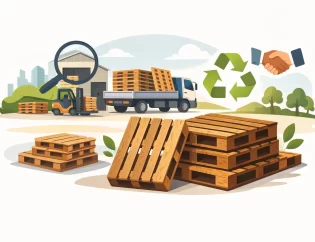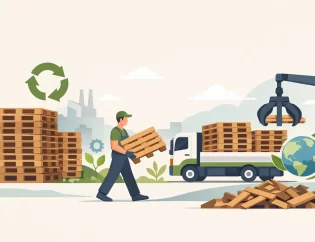
If your shipping floor is short on pallets, the question is not just where can I get pallets of wood. The real question is where you can get the right pallets, in the right volume, at the right time, without creating quality problems downstream. For most businesses, that means looking beyond one-off sellers and thinking in terms of supply consistency, usable grades, and total cost.
Wood pallets are easy to find in small numbers. They are much harder to source reliably when your operation depends on them every day. A warehouse can burn through pallet inventory fast, and a bad batch can create damage, slow loading, and headaches for both receiving and shipping teams.
Where can I get pallets of wood for business use?
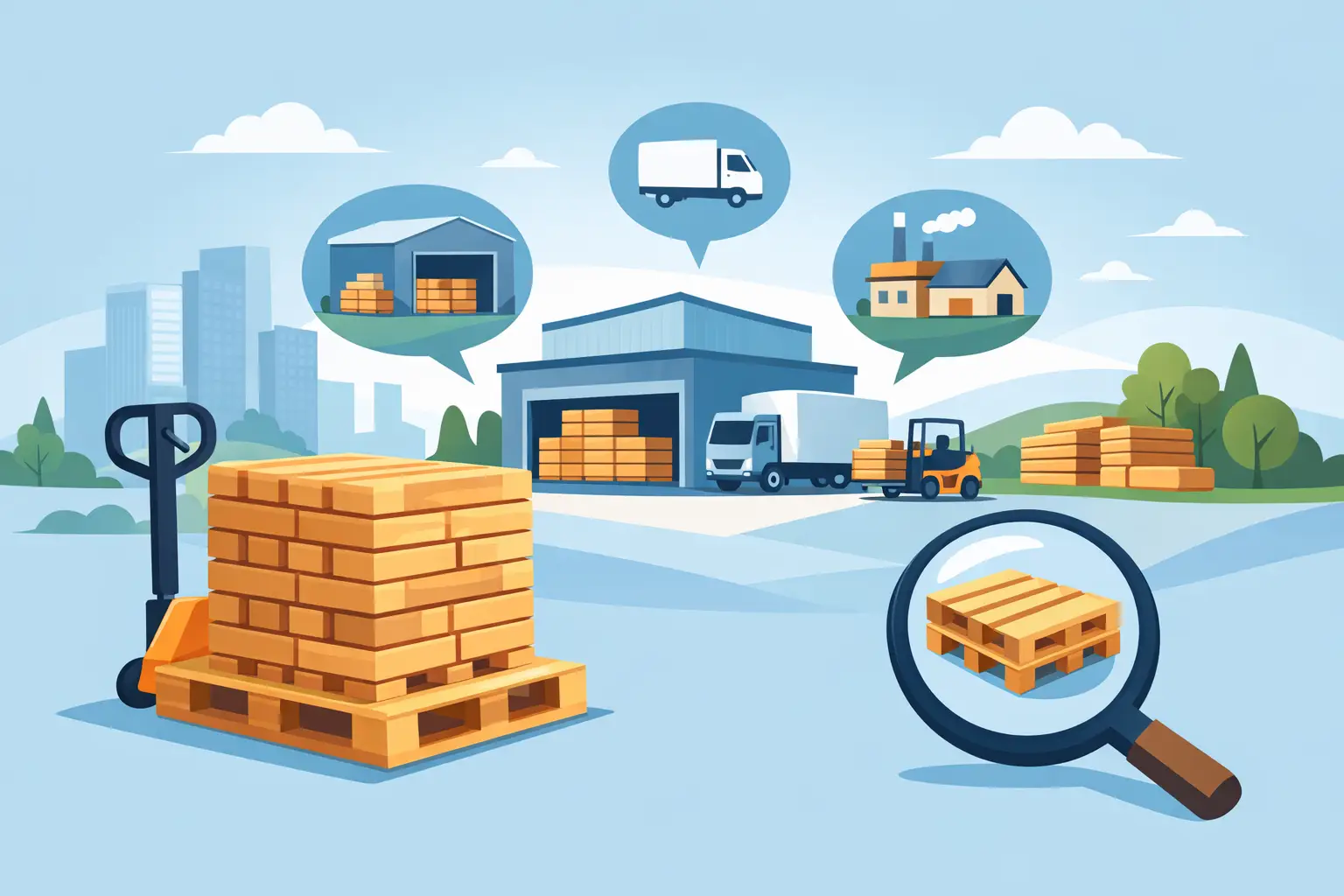
The short answer is that businesses usually get wood pallets from pallet recyclers, pallet manufacturers, logistics support providers, local distributors, and sometimes directly from nearby industrial facilities with surplus stock. Each source has its place, but not every source is a good fit for commercial operations.
If you need a few pallets for a one-time project, local listings or surplus yards may be enough. If you need hundreds of pallets a week, those channels usually do not hold up. Businesses that ship regularly need a source that can provide repeatable quality, predictable quantities, and some flexibility when demand changes.
That is why pallet recyclers and full-service pallet companies are often the most practical option. They typically handle collection, sorting, repair, resale, and in many cases pickup of used pallets as well. That gives buyers a more stable supply model than chasing spot availability.
The main places businesses source wood pallets
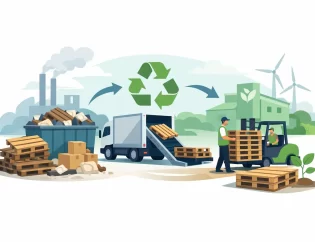
Pallet recycling companies are often the best starting point for companies that want usable inventory at a lower cost than buying new. Recycled pallets can work very well in manufacturing, warehousing, retail distribution, and internal material handling, provided they are graded properly and repaired to a dependable standard. This is also one of the few sourcing channels built for volume.
New pallet manufacturers make sense when your application has tight dimensional requirements, export needs, or product loads that call for specific performance. New pallets cost more, but they offer consistency when every unit needs to match a precise spec. If your outbound freight has customer compliance rules, new may be worth the premium.
Local industrial businesses can sometimes be a source of excess pallets, especially if they receive more inbound freight than they can reuse. The trade-off is inconsistency. One week they may have plenty, the next week nothing. Quality can also vary widely, from near-new units to pallets that should have been pulled from service.
Wholesalers, packaging suppliers, and logistics support companies may also carry pallets as part of a broader material handling offering. This can be useful if you want to consolidate vendors, but it is still worth asking whether they control their own pallet inventory or simply broker it. Direct control usually means faster turnaround and fewer surprises.
Online marketplaces exist, but they are better for opportunistic buys than ongoing supply. Photos rarely tell the full story, and pallet grading is not always consistent from one seller to another. For a business operation, low advertised pricing can disappear quickly if you end up with unusable stock or late deliveries.
What matters more than finding a seller
A lot of buyers focus first on price per pallet. That matters, but it should not be the only filter. The more useful question is whether the pallets will perform in your operation without adding hidden costs.
Start with pallet grade. If you are buying recycled pallets, ask how they are sorted and repaired. A dependable supplier should be able to explain the difference between premium, A grade, B grade, and mixed inventory, even if their terminology varies slightly. What matters is that you understand what you are getting.
Next is specification. Not every wood pallet is the standard 48×40 grocery pallet. Your operation may need a different size, stronger top deck spacing, specific entry style, or heat-treated inventory for export. If the supplier cannot match your load and handling requirements, a cheap pallet can become an expensive problem.
Volume and continuity matter just as much. A supplier may be able to sell you 200 pallets today, but can they handle 2,000 next month? Can they support seasonal surges? If your business depends on uninterrupted flow, pallet availability is part of your operating risk.
Delivery capability is another factor buyers sometimes overlook. A good source is not just someone with pallets in a yard. It is someone who can get them to your dock on schedule and with enough lead-time control to keep your warehouse moving.
Used pallets vs. new pallets
For many business users, used pallets are the most cost-effective choice. A well-sorted recycled pallet can do the job at a lower unit cost, especially for internal use, one-way shipments, or routine warehouse movement. It also supports waste reduction by extending the life of material already in circulation.
Still, used pallets are not right for every application. If your loads are heavy, your customers inspect incoming pallets closely, or your products are sensitive to contamination or cosmetic condition, new pallets may be the safer route. The higher price can be justified by lower risk and tighter consistency.
There is also a middle ground. Some operations use new pallets for customer-facing outbound shipments and recycled pallets for internal handling or less sensitive lanes. That kind of blended strategy can reduce costs without compromising critical requirements.
How to evaluate a pallet supplier
When a business asks where can I get pallets of wood, the better question is often which supplier can actually support my operation. That means looking at service, not just stock.
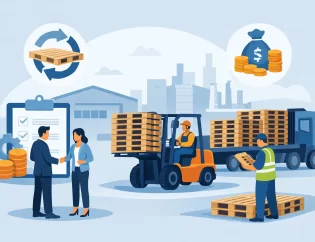
Ask how inventory is inspected. Ask whether repairs follow a standard process. Ask what sizes are usually available and how quickly special orders can be turned around. If you generate used pallets, ask whether the supplier also offers recovery or buy-back services. A two-way relationship is often more efficient than purchasing from one vendor and disposing through another.
It is also smart to ask about lead times, minimum order quantities, and delivery coverage. If your locations are spread across multiple sites, regional service capacity becomes a big factor. A supplier that works well for one facility may not be able to support your broader network.
Responsiveness matters too. In pallet supply, delays can hit shipping schedules fast. You want a provider that answers clearly, communicates availability honestly, and solves problems without turning every order into a negotiation.
Common sourcing mistakes to avoid
The biggest mistake is buying based on unit price alone. A cheaper pallet is not cheaper if it breaks under load, jams automation, damages product, or creates labor time for resorting and disposal.
Another mistake is assuming all used pallets are roughly the same. They are not. Condition, repair quality, wood integrity, size consistency, and previous use all affect performance. Buyers who skip these details usually end up paying for it somewhere else.
It is also risky to depend on informal supply if your operation has regular throughput. Free or low-cost pallets can seem attractive, but irregular sourcing creates shortages. Shortages force last-minute purchases, and last-minute purchases rarely produce the best pricing or quality.
Finally, do not ignore the value of pallet removal and recycling. Excess broken pallets take up yard and dock space, create safety issues, and add disposal costs. A supplier that can help manage outbound used pallets can improve both housekeeping and cost control.
A better way to think about pallet sourcing
For most commercial buyers, pallets are not a side purchase. They are part of the operating system that keeps freight moving. That is why the best source is usually not the cheapest listing or the nearest surplus pile. It is the supplier that can match your specs, deliver on time, and help you manage both incoming and outgoing pallet flow.
Companies like City Pallets fit that model because they do more than sell wood pallets. They support the full cycle – supply, recovery, repair, and reuse – which is often the most practical approach for businesses trying to control cost and reduce waste at the same time.
If you are asking where can I get pallets of wood, start with the source that will still be able to answer that question next month, next quarter, and during your busiest shipping week.